3D Woven
Denim
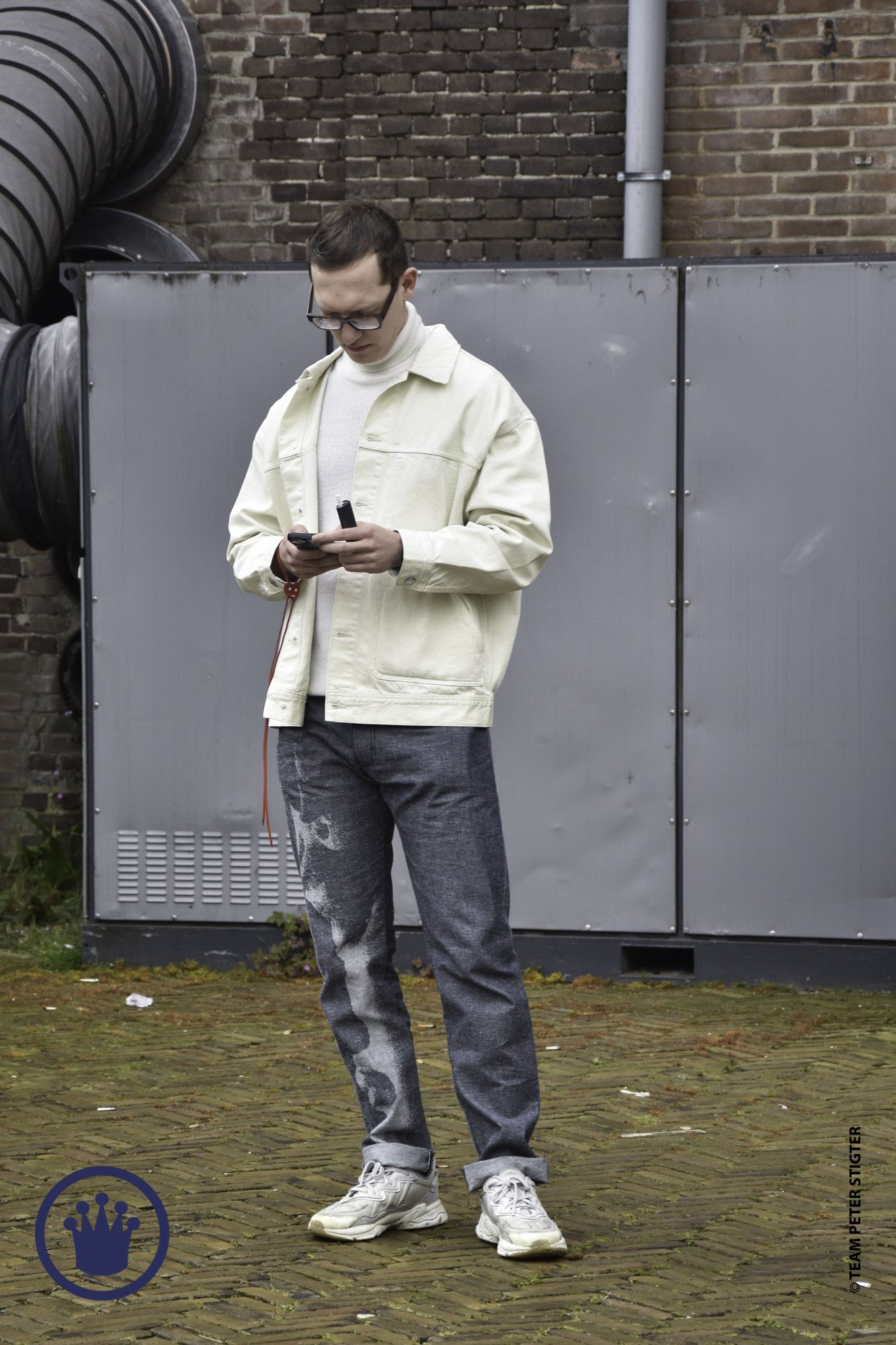
Five-pocket jeans woven to shape on an industrial Jacquard loom. Panels, seams and graphics come off the loom together, so almost nothing is cut away and 40% of the seams never need sewing.
WornThe jeans at Kingpins Amsterdam, April 2024. The sculpture graphic on the leg is woven, not printed. Photo: Team Peter Stigter.
01 · The idea
The pattern is the fabric.
Jeans start as flat denim that is cut into panels and sewn back together. Around a fifth of the fabric never makes it into the jeans, and every seam is another step on the sewing line.
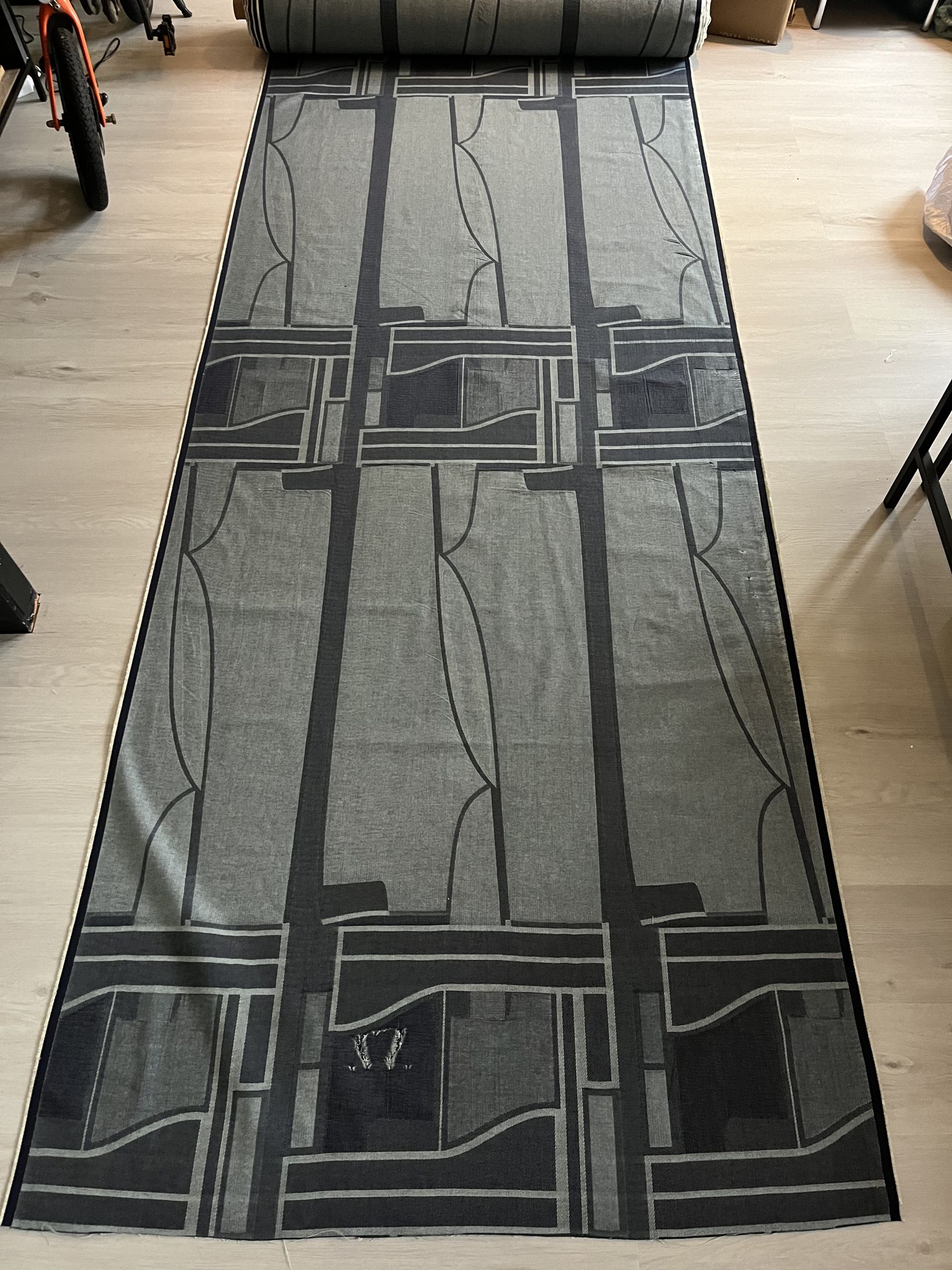
A Jacquard loom can lift each warp thread on its own. Weave two layers at once, join them only where the pattern says, and the loom draws panel outlines, seams and pockets into the cloth. What remains is a guided cut and a short assembly.
It started with one line in a lecture: up to 80% of a product’s environmental impact is decided at the design stage. So the brief I set was a five-pocket that looks and feels like denim, made in an existing supply chain, with less cutting, sewing and waste.
“I bet it’s possible to create zero waste 3D woven jeans.”
At the start of the project
02 · Method
Two ways to make a jean.
Same five-pocket, same indigo warp, same kind of factory. The difference is where the pattern lives: on a cutting table, or in the loom.
Cut and sew
- 01Weave flat denim
- 02Lay out a marker, cut the panels
- 03Sew every seam
- 04Wash and finish
3D woven
- 01Weave every panel in one roll, layers and seams in place
- 02Finish the roll: soft inside, raw outside
- 03Cut along the woven lines
- 04Sew only what the loom cannot
Estimates from the thesis evaluation of the 3D woven pair against conventional cut and sew. Context: one pair of Levi’s 501 uses 3,781 litres of water and 33.4 kg CO₂e over its life, 68% of that water to grow the fibre (Levi Strauss & Co., 2015).
03 · Process
Six stages, yarn to feedback.
Select a stage, or use the arrows
03 · Process / Iterations
Five versions to one pair.
“Fixing the fly, only to move the pocket, and then the yoke is off.”
From my thesis, on balancing fit, waste and looks
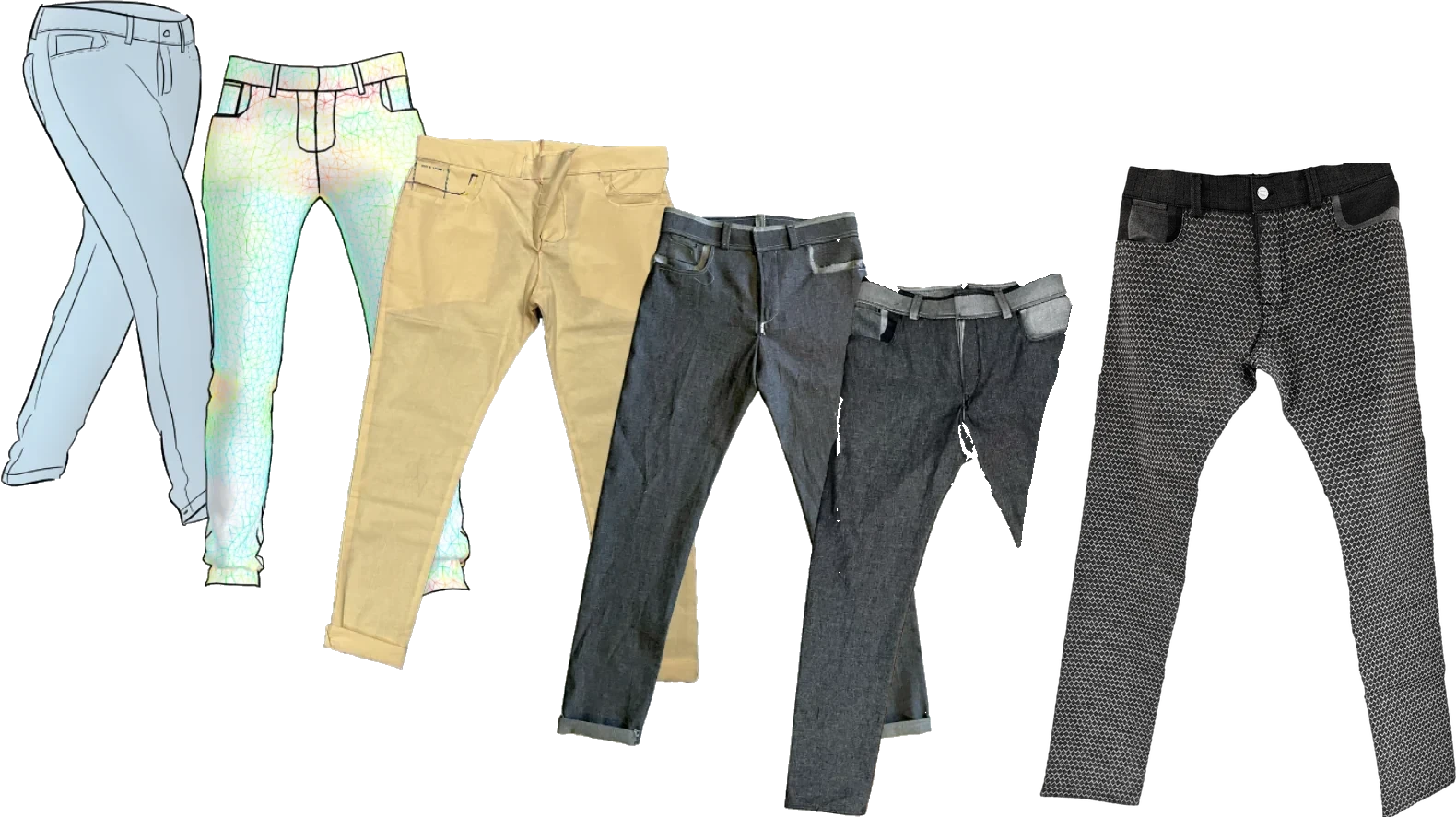
- V1Sketch to 3D
Folding structures and seam positions tested; two zero waste concepts built in CLO3D.
- V2Cut and sew
Yoke curve added. The back pockets now come from the crotch cut-out, so that piece isn’t waste. Pattern split into a top and a bottom section.
- V3First woven
The first pair off the loom. Yoke raised and pockets enlarged for fit, a two-layer fly woven onto the waistband, seam allowances woven in.
- V4Second woven
Pockets turned inside out to hide fraying, a finer Ne 10 weft so the top section closes supple, shrinkage built into CLO3D, and room in the waistband for tailoring.
- V5Final
The top section flipped to show indigo instead of white weft, the yoke angle tuned to lose excess fabric at the back, and pattern and graphic editions from the same file.
03 · Process / Tech pack
Specified for the factory.
Written for Diamond Denim: front, fly, pocket, back and pocket bag specs, with stitch types, placements and bar tacks in place of rivets. Their team in Pakistan assembled pairs from it and my assembly guide.
04 · Result
Woven, cut, worn.
Swipe, drag or use the arrows. Or just keep scrolling.
04 · Result / The pair
The finished pair.
Photographed as woven. Select a detail, or step through with the arrows.
Front
Back
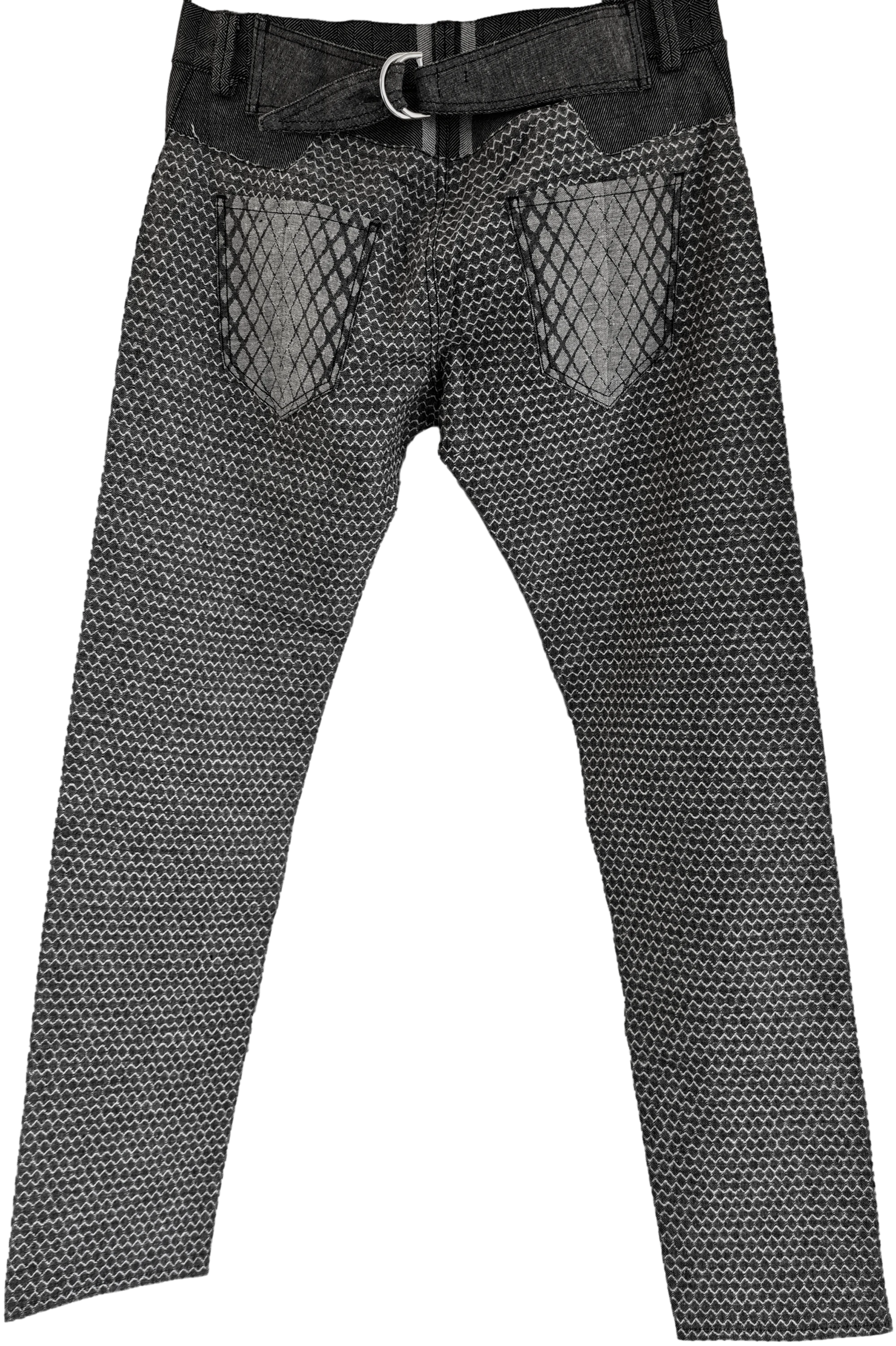
04 · Result / Details
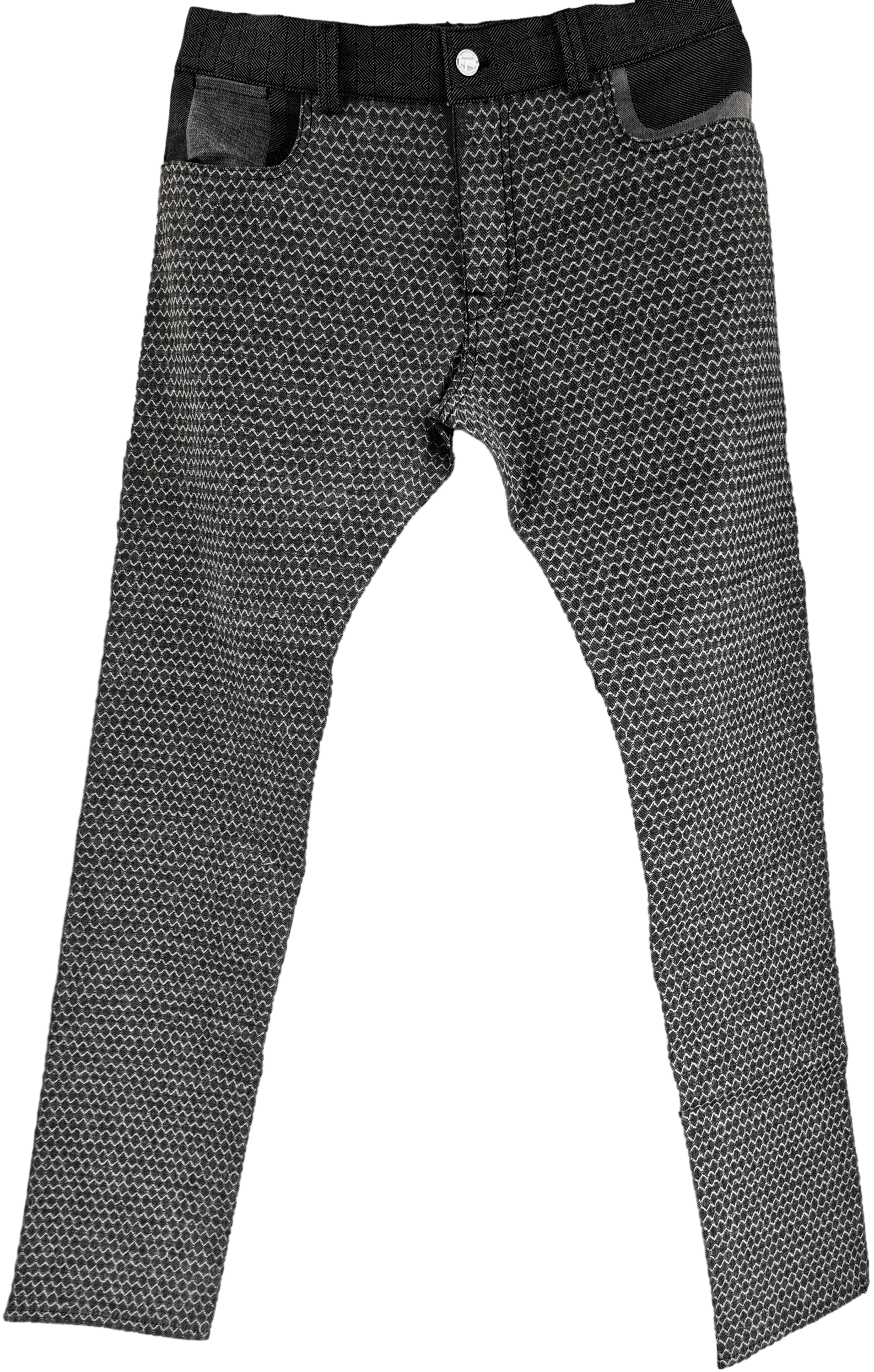
Denim codes, woven in.
The fifth pocket, the label and the sculpture graphic are part of the weave. Nothing to peel off or separate before recycling.
Fifth pocket, woven in place
05 · Design language
Should it look like denim?
“Design really needs to be more conventional.”
Industry respondent
“I want to see a garment pattern that is uniquely a product of 3D weaving.”
Industry respondent
Both, from the same loom. I kept the base pair classic on purpose, so the industry recognises it as denim. Three weave variables add everything else.
05 · Design language / Variables
Three variables. One loom.
Every surface effect comes from how the threads bind, not from print or trims.
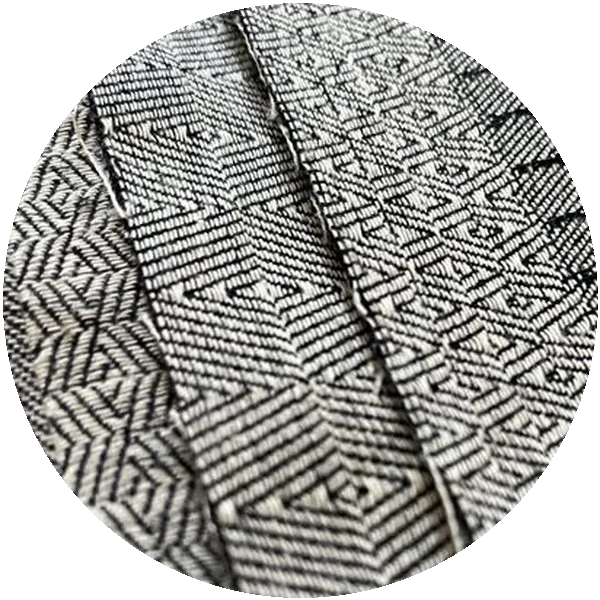
The same pattern, turned. Left and right twill run the pattern in different directions.
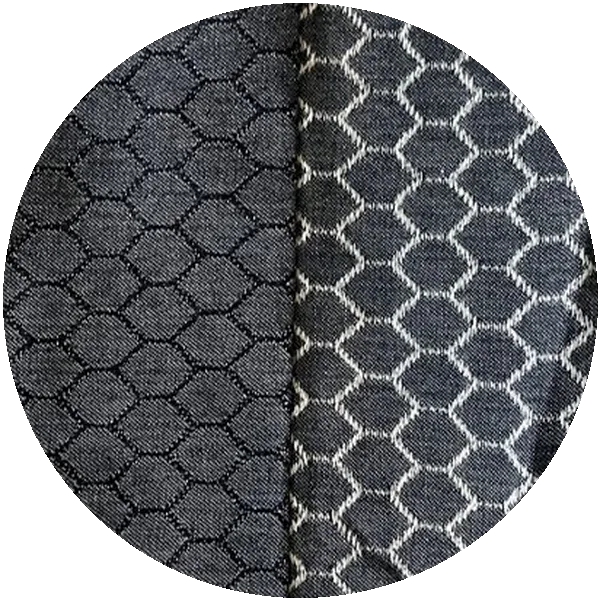
Different weave structures sit side by side in one fabric.
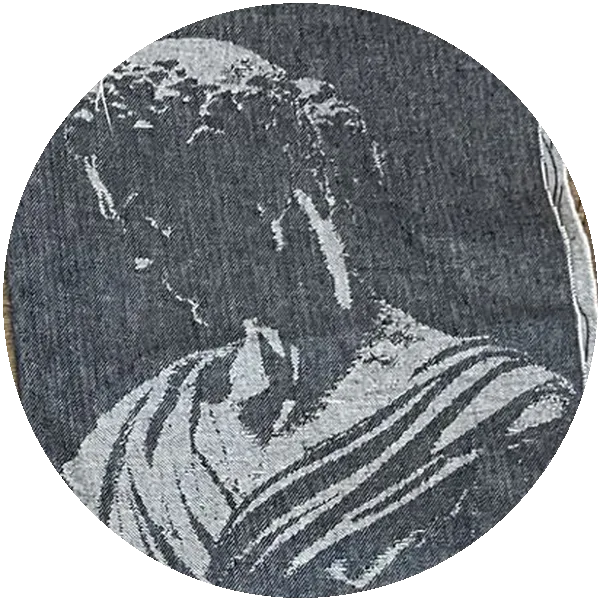
Warp and weft swap places to draw an image in contrast.
01 / 03 · OrientationThe same pattern, turned. Left and right twill run the pattern in different directions.
02 / 03 · StructureDifferent weave structures sit side by side in one fabric.
03 / 03 · GraphicWarp and weft swap places to draw an image in contrast.
CombinedMix and match all three. Only the file changes, so a new edition costs almost nothing extra to make.
05 · Design language / Editions
Woven four ways.
One zero waste pattern, four editions. Only the map of bindings changes between standard, pattern and graphic, and the women’s pair is the same pattern, scaled.
Select a pair to enlarge
Standard, women’s · Standard, men’s · Pattern, men’s · Graphic, men’s
05 · Design language / Colour and finish
Colour, set in the loom.
Industry respondents asked for more on colour, finish and wash. In 3D weaving those are decided in the yarn and the binding, before the roll leaves the loom.
- 01Indigo warp
Ring-dyed indigo, so it fades with wear like any good pair of jeans.
- 02Pastel by nature
Warp-dyed 3D woven denim comes off the loom with a pastel-like saturation. Dyed weft yarns can deepen it; the warp on the loom stays the same.
- 03Indigo where it shows
V5 changes the top section’s single-layer weave to show saturated indigo instead of the white cotton weft.
- 04Soft inside, raw outside
Only the inside of the legs is finished: soft against the skin and somewhat preshrunk, while the outside stays raw.
06 · Response
From thesis to trade show.
After my 20-minute online tech talk, 16 of the 50+ denim professionals attending answered an anonymous survey. 10 of them had more than 10 years in the industry, and half named zero waste as the most interesting part.
See value for a more sustainable industry
Expect brands to adopt it within 5 years
Would accept up to 25% higher production cost
“Great to see the industry challenged.”
Industry respondent
Seven respondents doubted the look and feel, six the scale and cost. Fair questions, and the next ones to answer.
PressSourcing Journal: New Project Explores Creative and Sustainable Benefits of 3D Woven Jeans
April 2024Kingpins Loves Education panel and light installation, two weeks after I graduated.
The jeans in the Kingpins light installation
Event photos: Kingpins Amsterdam and Team Peter Stigter, April 2024
Eindhoven, October 2024Part of the Secrid Talent Podium, in the section by Milou Voorwinden. The jeans shown with woven panels and yarn.
Secrid Talent Podium, Dutch Design Week 2024
Munich, 2025A similar setup, this time with the graphic edition of the jeans.
The graphic edition at Munich Fabric Start
07 · Outcome
It already works on the looms mills run today.
Saving material, labour, waste and water. The brief asked for a five-pocket that looks and feels like denim, from an existing supply chain, with less cutting, sewing and waste. The final pair does all three and sits at technology readiness level 6 to 7: past the lab, not yet on the shelf. What’s next: a full size range, a cost model, and patterns that fit from a body scan.
“Every obstacle provided an opportunity for improvement, both in my skills and the 3D woven design.”
From my thesis, reflecting on the results
ChairDr. Holly McQuillan, TU Delft
Mentor and weave expertMilou Voorwinden, TU Delft
Industry partnerDiamond Denim: Maurizio Baldi, Farhan Afzal
Denim expertMohsin Sajid, Endrime
Builds onBarbara Vroom’s 3D woven denim jacket and Sterre de Jager’s systems study
Tech talkWatch on YouTube
Next: zero waste streetwear.
Zero waste pattern concepts in CLO3D: a tracksuit, a baggy set with an oversized graphic, and a dress.
Each one could follow the route of the jeans: one map of bindings, woven to shape, then a short assembly. A first look at where 3D woven garments can go beyond five-pocket jeans.
Zero waste tracksuit, CLO3D
Next project · 02 / Apparel
The moment before something is madeAfter Michelangelo, The Creation of Adam, Sistine Chapel, 1508 to 1512